

13.8.2019
£2.6 million settlement for paralysed clinical negligence claimant
In April 2016 Osbornes secured damages of £2.6m for a 76-year-old man who sustained a spinal haematoma and subsequent cauda equina...
Read moreCauda Equina Syndrome is a serious spinal injury that can cause permanent disability if not treated urgently. If your diagnosis or treatment was delayed, you may be entitled to claim compensation. Speak to an expert Cauda Equina Syndrome lawyer for specialist advice.
“Ben Posford’s particular expertise in this area focuses upon cauda equina claims, of which he is an undisputed powerhouse.”
The cauda equina, meaning ‘horses tail’ in Latin, is the name given to the bunch of nerve roots found at the bottom of the spinal cord, and Cauda Equina Syndrome arises when these nerves are damaged. Where Cauda Equina Syndrome is suspected, this should always be treated as a surgical emergency. From the onset of the condition, there is a very small window of opportunity to diagnose and operate before permanent damage is done to the spinal cord. Depending on the cause of the compression, emergency surgery will be required within approximately 12 to 48 hours of the initial onset of symptoms to provide the best possible outcome for the patient. In the worst cases where surgery is not performed in time, sufferers are left with permanent paralysis from the waist down, including a complete loss of motor and sensory function in the legs, bladder and bowel.
There are 5 NHS red flags:
Any GP who suspects Cauda Equina Syndrome will advise their patient to proceed immediately to A&E for an emergency MRI scan. The scan will usually show whether or not immediate surgery is required.
Most CES claims arise from patients who have not been properly examined by their GP or in hospital leading to a significant delay before surgical intervention. The UK has a particularly poor record for Cauda Equina Syndrome, because of a general lack of awareness about the condition, and poor reaction times for the diagnostic MRI scan and transfer to theatre for immediate surgery.
All medical professionals owe a duty of care to their patients, but they will not be guilty of negligence if they act in accordance with a practice accepted as proper by a respectable body of medical practitioners skilled in their particular area of medicine. For a doctor or an NHS Trust to be found negligent, it must be shown that the patient was provided with inadequate treatment. Generally, this can be proved in one of four ways:
Claims for compensation arising from Cauda Equina Syndrome are complicated to win, and an inexperienced solicitor will recover only a fraction of the true award owed to a successful claimant. Only experienced medical negligence solicitors, approved by the Spinal Injuries Association, should act for Cauda Equina Syndrome sufferers.
Please contact Ben Posford for free advice about whether and how you can bring a claim for compensation for the injuries and other losses suffered as a result of Cauda Equina Syndrome.
Cauda Equina Syndrome affects 1-3 people per 100,000 population in England and there are around 8,000 suspected cases every year. (source)
Cauda Equina Syndrome is not a life-threatening condition, but delays in diagnosis or treatment can result in permanent, life-changing harm. Without urgent medical care, patients may experience irreversible nerve damage, including paralysis, loss of bladder or bowel control, and chronic pain.
Ben Posford leads the catastrophic injury team and regularly represents claimants in neurological injury and fatal accident claims. He also has a niche specialism in claims involving cauda equina syndrome.
"She has represented victims in a number of high-profile cases."
"Ben Posford’s particular expertise in this area focuses upon cauda equina claims, of which he is an undisputed powerhouse."
"Straightforward and clear, he is good at cutting through the noise."
"Totally tenacious but brilliantly commercial; very impressive."
"Incredibly impressive; he not only knows the technical ins and outs but is a charismatic personality, one clients absolutely love and trust."
"Affable and charming with very good client-handling skills."
"Her knowledge base is second to none and her understanding of the litigation process stands out, as does her ability to work collaboratively."
"Offers specialist expertise in cauda equina syndrome cases."
"Osbornes often handles claims valued at over £1m, particularly relating to severe brain and spinal cord injuries and niche areas such as cauda equina syndrome and cycling accidents."
"Intellectually rigorous and intelligent."

Client StoriesVIEW ALL
In April 2016 Osbornes secured damages of £2.6m for a 76-year-old man who sustained a spinal haematoma and subsequent cauda equina...
Read moreLegal Victory for Former Nursery Worker Aileen Cooper Background of the Case Ben Posford at Osbornes Law represented former nursery...
Read more



Insights From our Medical Negligence Lawyers VIEW ALL

Failure to Meet Ambulance Response Targets In 2017, the Secretary of State for Health accepted the new ambulance performance standards recommended...
Read more
What is the Early Notification Scheme? The NHS Early Notification Scheme (“ENS”) has reached its sixth anniversary. Established in April 2017,...
Read more
It has been reported in the press that chemist closures will have an impact on patients living in deprived or...
Read more
In the news, it has been reported that private clinics that offer pregnancy scans to women are not meeting the...
Read more
Many patients with low iron, particularly during pregnancy or postnatally, may be advised they need an iron infusion such as...
Read more
The Healthcare Safety Investigation Branch (HSIB) has identified that patients may come at risk of harm whilst waiting in ambulances...
Read more
Breast cancer screening has improved significantly in the UK due to research bettering the understanding of this terrible disease, which...
Read more
An increasing number of women in the UK feel brushed off by GPs when presenting with real symptoms, with many...
Read more
In April last year I wrote a piece about government setting up a taskforce to look into why there are...
Read more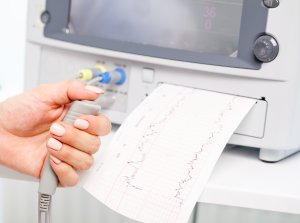
Poor interpretation of a Cardiotocograph, more commonly known as a CTG, is a leading cause of stillbirth and brain injuries...
Read more
Amidst record-breaking heatwaves and a lengthy patient waiting list due to COVID backlogs, it is not surprising that this summer...
Read more
A century ago, insulin was first used to treat a 14-year-old boy dying of type 1 diabetes. A hundred years later,...
Read more
The NHS recently recorded their waiting list to be at 6.5 million, a record high. Much of this backlog is due...
Read more
An interim report on the state of maternity services at Nottingham University Hospitals NHS Trust has just been released. However,...
Read more
In early January 2022 there were nearly six million people in England waiting for routine operations and treatment: a record high....
Read more
It has been reported today that the government has set up a new task force to look into why there...
Read more
HSIB Report on Maternity Pre-arrival Instructions from 999 Call Handlers The Healthcare Safety Investigation Branch (“HSIB”) investigate NHS maternity incidents that...
Read more
Court of Appeal Judgement on Secondary Victim Claims Judgment was today handed down by the Court of Appeal in the...
Read more
Deep Vein Thrombosis, Pulmonary Embolism and Blood Clot Claims Blood clots – general risks Blood clots are not uncommon and there...
Read more
If you want to obtain copies of your medical records from your GP or the hospital where you have been...
Read more
Most babies are born naturally at around 40 weeks gestation. However, some pregnancies continue for longer. According to data from the...
Read more
The prevalence of lung cancer Lung cancer is one of the most common and serious cancers – sadly, it is often...
Read more
In September, I attended the Brain Injury Group’s Sepsis training event in the City of London with my colleague,...
Read more
The Healthcare Safety Investigation Branch (HSIB) The HSIB (Healthcare Safety Investigation Branch) is an independent organisation comprising a team of...
Read more
